Kenya’s rapid digital expansion has placed children at the centre of an increasingly connected yet insufficiently protected online environment. The country is among the most digitally connected in Sub-Saharan Africa, with approximately 73.2 million mobile devices connected to networks by mid-2025, representing a device penetration rate of about 139.7% (Communications Authority of Kenya: Mobile, Data, and Digital Services on the Rise). As digital access has grown, so too has children’s online engagement. According to the Disrupting Harm Kenya assessment (2021), 67% (approximately 14.7 million) of children aged 12–17 are internet users, yet two-thirds of these children have never been taught how to stay safe online.
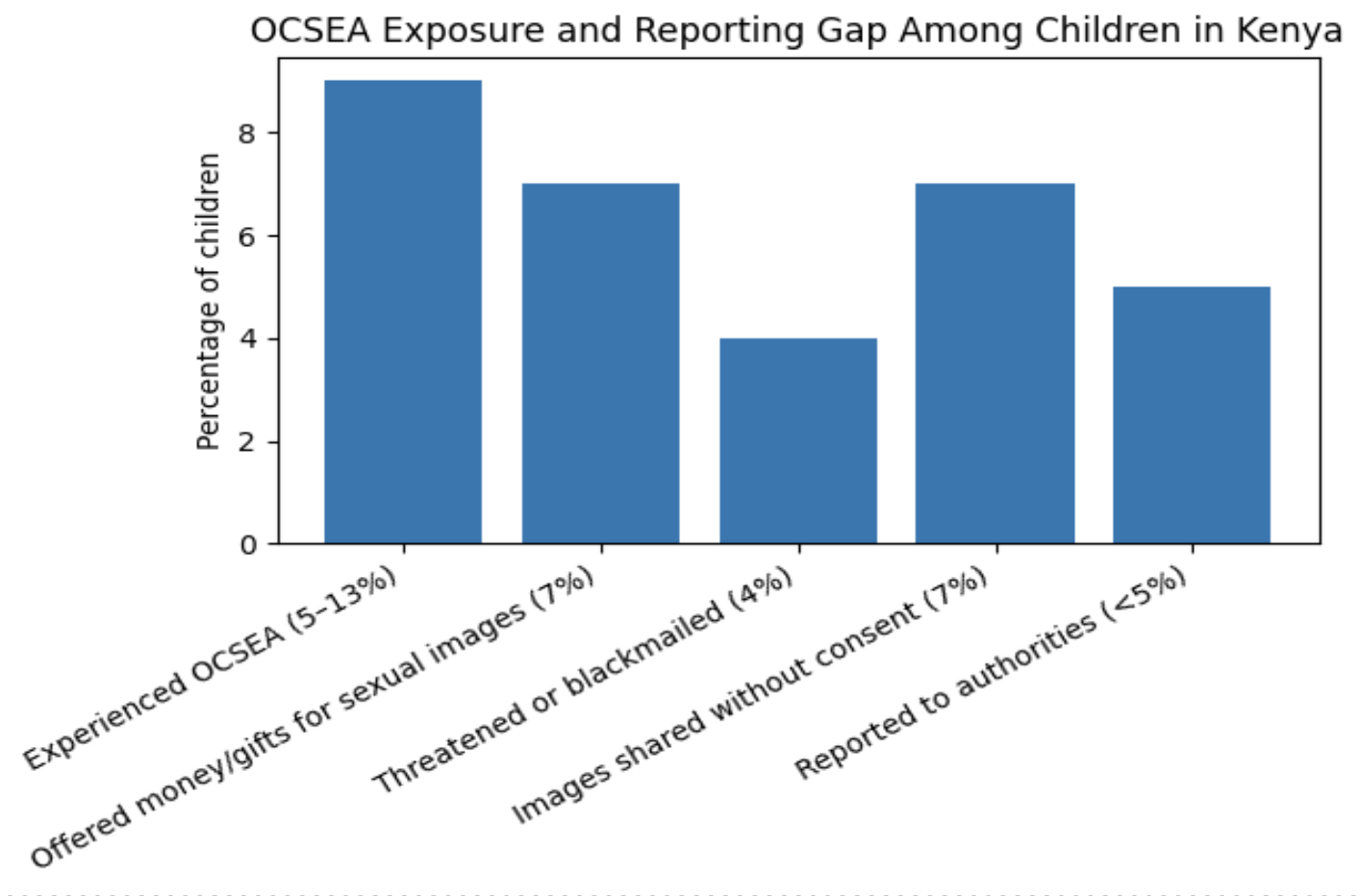
The same study estimates that 5–13% of internet-using children have experienced some form of online child sexual exploitation and abuse (OCSEA), including sexual solicitation, grooming, sexual extortion, and non-consensual sharing of sexual images. Alarmingly, 7% of children reported being offered money or gifts for sexual images, 4% had been threatened or blackmailed, and 7% had their sexual images shared without consent, while less than 5% of affected children formally reported these experiences, largely due to shame, fear of blame or punishment, and lack of awareness of reporting pathways.
To deepen understanding of how these risks manifest in children’s daily lives and how systems respond in practice, Praesidio Safeguarding conducted a national OCSEA scoping study, combining desk review, key informant interviews, and focus group discussions with children, caregivers, teachers, law enforcement, and civil society actors across five counties. The scoping revealed a consistent pattern of high digital access coupled with low digital literacy, weak parental and school-level capacity, and extremely low reporting, despite growing exposure to online harms.
Informed directly by these findings, Praesidio Safeguarding is rolling out a targeted prevention and empowerment package that focuses on strengthening children’s digital literacy through child-friendly, influencer-led and peer-based awareness campaigns; equipping parents and caregivers with practical digital parenting skills and non-punitive response approaches; and supporting teachers with tools and training to deliver age-appropriate online safety education and respond safely to disclosures. Together, these interventions aim to close the protection gap by matching Kenya’s high digital access with equally strong systems of awareness, skills, and support for children.